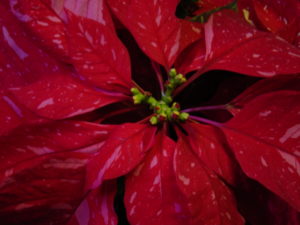
Poinsettia– the flowers are actually the yellow structures in the center. The red portions are modified leaves called bracts.
Use these ten tips to keep your Holiday plants healthy from purchase to bringing them home and beyond.
Holiday plants are everywhere these days. Their beautiful bracts and blooms are so hard to pass up when it’s gloomy outside. Do you worry about buying these seasonal plants, for fear they’ll be dead by Christmas? With a little common sense and maybe some extra attention, there’s a good chance your plants will still look great well past the Holidays.
1. Pay attention to where plants are in the store. Warm and cold drafts can shorten the lifespan of blooms or even kill some Holiday plants. Probably the worst situation I’ve witnessed was at a big box store. They had their poinsettias sitting just inside the entry, where they got a big blast of cold air every time someone walked in. To make matters worse, they were sitting beneath a large heater blowing hot air down on them. Needless to say, the plants looked pretty sad.
2. Look for plants that still have some flower buds and just a few blooms if possible. If the plant is in full bloom, you have no idea how long the blooms will last at home. If there is at least a bud or two on the plant, you can reasonably assume you are maximizing the time you should be able to enjoy the flowers at home– more bloom for your buck so to speak.
3. Choose plants that have an overall healthy appearance. More often than not a plant that looks sickly in the store will not improve once you get it home, at least not in time for this Holiday season. Worst case scenario: you may bring pests into your house that will infest other plants you already have.
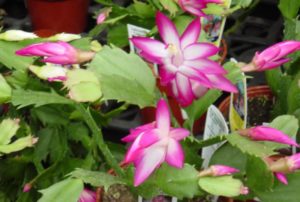
Thanksgiving Cactus, Schlumbergera truncata
4. Make sure the plants you’re buying are covered and protected from the cold before you exit the store so you can get them home safely. Some plants, like the poinsettia, will drop their leaves when exposed to even the briefest of cold temperatures.
5. But after you get home with your new plant, it’s essential to remove all the protective coverings around the plant. Even clear plastic sleeves that are open on top hold too much moisture. Many plants deteriorate rapidly without adequate air circulation.
6. Decorative pots without drainage holes and plastic or foil pot coverings can all make it incredibly easy to overwater. Some people just remove these coverings when they water so the excess water will drain away. Another option is to poke holes in the foil or plastic covering and set the plant in a saucer to catch any drainage. Standing water left in these decorative covers will promote root rot and shorten the life of your plant.
7. Overwatering is probably the top killer of houseplants, and Holiday plants are no exception. Allowing the soil to dry slightly between waterings is beneficial to most plants. But how do you know the soil is dry? A pot of dry soil feels lighter than the same pot after watering– but this takes some practice to recognize. An easier way is to insert a finger into the soil up to the first knuckle. Dry soil will feel dry and not cling to your finger.
8. Although overwatering can kill plants, underwatering can damage or even kill plants allowed to dry to the point of wilting. The more times a plant dries to the point of wilting, the greater the chance it will not recover. On a blooming plant, repeated cycles of wilting shorten the life of any blooms present and may cause buds to drop.
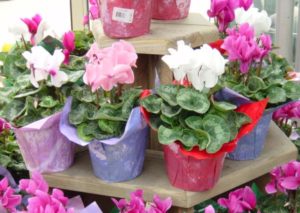
Florist’s Cyclamen, Cyclamen persicum
9. Even if Holiday plants are a critical piece of your decorating scheme this season, they still need an appropriate location to exist at least most of the time. Go ahead and use a holiday plant as a centerpiece or accent in your home during a party. But after the festivities, return the plant to a location with bright indirect light and a comfortable room temperature (68-72ºF). Blooming plants may hold their blooms longer in cooler spaces, but temperatures lower than 55 ºF will likely damage them.
10. Fertilizing Holiday plants after purchasing is not necessary, and it may shorten the life of blooms or harm the plant. It’s best to hold off on promoting new growth with fertilizers until Spring when conditions are more suitable. For the time being, remove blooms as they fade to promote development of new flowers. Also remove any dead leaves or other debris. Above all, enjoy your Holiday plant!
If you liked this post, please subscribe to Grounded and Growing today and receive your copy of “15 Tips to Become a '15 Minute Gardener'” so you can spend less time working ON your garden and more time enjoying being IN your garden.! It’s absolutely free. When you join the Grounded and Growing community, you’ll finally take the garden off your “To-Do” list and allow yourself time to enjoy your garden and savor the peace and serenity there. I tell subscribers about new posts as soon as I hit ‘publish’ and send weekly-ish updates on what’s going on in my garden– good, bad AND ugly.



Leave a Reply